
When we speak of Uttarpara’s old families, the Chatterjee name comes up again and again. In Bengali, the surname is Chattopadhyay; in English records, it is often written as Chatterjee. Like many old Bengali families, the name appears in different forms across documents, local memory, street names, and family histories.
The story of the Chatterjee families of Uttarpara is not the story of just one house or one famous person. It is a wider story of settlement, education, law, culture, public service, and the freedom movement. Their legacy is visible in old family homes, in local institutions, in the names of roads and lanes, and in the lives of several remarkable people who shaped the cultural and political atmosphere of Uttarpara.
Early Chatterjee Settlements in Uttarpara
Uttarpara was not always the town we know today. Older accounts describe the area as a marshy settlement on the banks of the Hooghly. Its growth into a town was gradual and closely connected with the movement of old Bengali families into the area.
According to the history recorded by Uttarpara-Kotrung Municipality, families such as those of Ramtanu Chatterjee and Ramnidhi Chatterjee came to settle in old Uttarpara through matrimonial links with the descendants of Ratneswar Roychowdhury, who is remembered as an early founder figure of Uttarpara. These families became part of the social and cultural fabric of the town.
This is important because it tells us that the Chatterjees were not late arrivals. They were present in Uttarpara from an early stage of the town’s social formation. Along with other families, they contributed to the intellectual, spiritual, and civic life of the area.
Even today, the Chatterjee presence can be traced through local place names. Uttarpara still has roads and lanes such as Ramnidhi Chatterjee Lane, Dhrubesh Chatterjee Lane, R.C. Chatterjee Lane, Chatterjee Street, Kabi Kirandhan Chatterjee Street, and Roy Bahadur S.C. Chatterjee Lane. Street names are not just addresses. They are small public archives. They tell us whose memory a town has chosen to preserve.
Not One Family, But Many Chatterjee Lines
One thing should be said clearly: there was not just one Chatterjee family in Uttarpara. There were several branches and households, each with its own history.
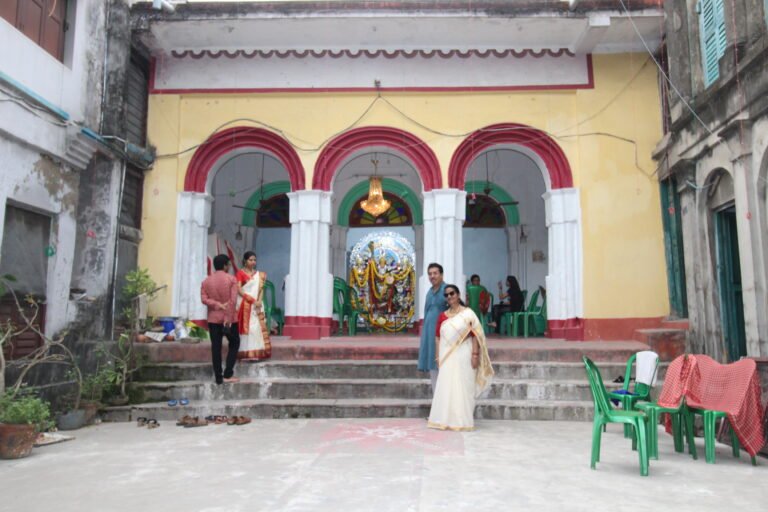
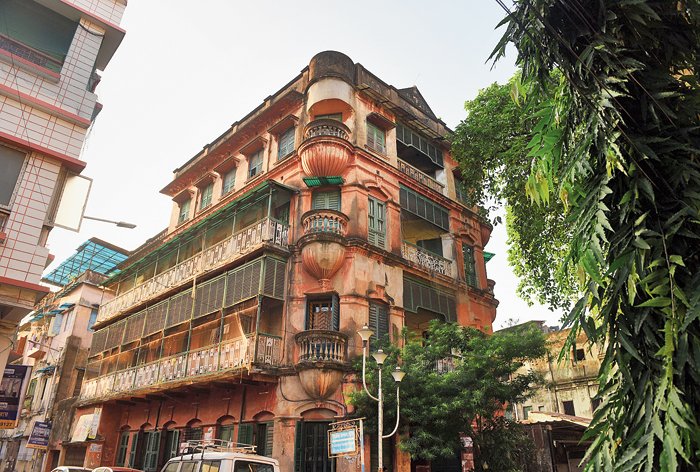
Two important Chatterjee family homes often mentioned in local heritage accounts are Ukil Bari and Pathshala Bari. Both are associated with different Chattopadhyay family lines, and both help us understand how this surname became connected with education, law, culture, and public life in Uttarpara.
Ukil Bari: The Lawyers’ House
Ukil Bari, meaning “Lawyers’ House,” is one of the well-known Chattopadhyay family homes of Uttarpara. It was established around 175 years ago by Sri Manmathanath Chatterjee at old Mondal Street, now known as Netaji Subhash Road.
Manmathanath Chatterjee was a lawyer and later became a sub-judge in Dacca, now Dhaka in Bangladesh. Because of this strong connection with the legal profession, the house came to be known as Ukil Bari.
The family produced several notable figures. Nalini Mohan, the eldest son of Manmathanath, was known as an Ayurvedacharya and was associated with education. He also translated Shakespeare’s “A Midsummer Night’s Dream” into Bengali.
Jamini Mohan, the youngest son of Manmathanath, was also a well-known lawyer who practised in the Chinsurah and Serampore courts. Other sons of Manmathanath were also connected with the legal profession in Hooghly district.
Another important figure from Ukil Bari was Aloknath Chatterjee, popularly known as Alku Babu. He was a brilliant student of Calcutta University in law and English. He initially began his career as a lawyer in Serampore, but later moved into education. He became Assistant Headmaster of a village high school in Uttarpara and later Headmaster of Uttarpara Town School, now Amarendra Vidyapith. He is remembered as an important educational figure in the town.
Byomkesh Chatterjee, another member of the family, was known for his contribution to acting, cultural performances, and local organising. He was also associated with the development of Uttarpara Jaykrishna Public Library, one of the town’s proudest institutions.
Hrishikesh Chatterjee, a grandson of Manmathanath, was active in social, cultural, and political life. He joined the Indian National Congress and participated in the Non-Cooperation Movement. He was also connected with trade union activity and local organisations such as Uttarpara Sangeet Chakra, Uttarpara Sri Aurobindo Parishad, and other civic-cultural initiatives.
Through Ukil Bari, we see a very important pattern: the Chatterjee family was not limited to private household prestige. Its members entered law, education, theatre, public libraries, social organisations, nationalist politics, and trade union work.
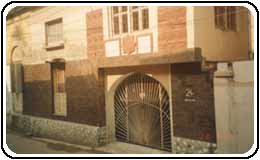
Chaitanya Dev Chatterjee: Artist and Revolutionary
One of the most fascinating names connected with Ukil Bari is Chaitanya Dev Chatterjee.
He was the eldest son of the lawyer Jamini Mohan Chatterjee. Chaitanya Dev was both an artist and a revolutionary. He studied art at the Government Art College in Calcutta and later came under the influence of the Bengal School of Art associated with Abanindranath Tagore.
He was also involved in the revolutionary movement and was convicted in the Dakshineswar Bomb Case. After his imprisonment, he was exiled to a remote place near Kalimpong in Darjeeling.
As an artist, Chaitanya Dev became associated with the Indian Society of Oriental Art. His paintings were published in important Bengali journals such as Prabasi, Bharat Barsha, and Modern Review. He also wrote books such as “Kalipuja Chitrabali” and “Durga Puja Chitrabali,” published by Calcutta University.
His life beautifully captures a major feature of Uttarpara’s history: the same town that produced scholars, teachers, and lawyers also produced revolutionaries, artists, and cultural organisers.
Pathshala Bari: A House Named After a School
Another important Chattopadhyay family home was Pathshala Bari. The name literally means “the house of the primary school.”
This family line is connected with Babu Rajnarayan Chatterjee, who migrated from Mahesh, near Serampore, to Uttarpara around the middle of the nineteenth century. His migration was linked to a matrimonial alliance with the Roy Chowdhury family.
The house came to be known as Pathshala Bari because a primary school was established on the western side of its spacious lawn around 1900–1905. This detail is important because it shows how education was not only an abstract value but also a physical part of family and community life.
Rajnarayan’s eldest son, Khetra Chandra, was a brilliant student. He passed the Entrance Examination of Calcutta University in 1859 and later passed the B.A. examination. He went on to become Headmaster of Guwahati High School in Assam.
Another important figure from this family was Debendra Nath Chatterjee, a successful businessman who set up brick kilns along the Hooghly River and the Bally Canal. He was also associated with the freedom movement and helped recruit young men under the leadership of revolutionary Amarendranath Chatterjee. He maintained a library for local youth to inspire them in the cause of freedom.
Again, the pattern is familiar: education, entrepreneurship, public-mindedness, and nationalism came together in one family history.
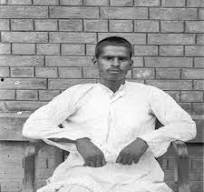
Amarendranath Chatterjee: Uttarpara’s Revolutionary Son
Among the most important Chatterjee figures associated with Uttarpara is Amarendranath Chatterjee, also known as Amarendra Nath Chattopadhyay.
He was born in Uttarpara in the late nineteenth century and became an important figure in the Indian revolutionary movement. He was the son of Upendranath Chatterjee. He received his early education in Uttarpara and later studied at Duff College, now Scottish Church College, in Calcutta.
Amarendranath became associated with the Jugantar movement and played a major role in raising funds for revolutionary activities. His work was not confined to Bengal alone. His activities extended to revolutionary centres in Bihar, Odisha, and the United Provinces.
He also established the Uttarpara Shilpa Samiti with support from Raja Pyarimohan Mukherjee and Rajendranath Mukherjee. The Samiti promoted carpentry and handloom work, but such institutions also became linked to wider nationalist and Swadeshi activities.
Amarendranath came into contact with Sri Aurobindo and Bagha Jatin. He worked closely with revolutionary networks and later became associated with the Indo-German Conspiracy during the First World War. After a period of underground activity, he returned to public life and was also connected with political and labour organisations.
For Uttarpara, Amarendranath Chatterjee is important not only as an individual revolutionary but also as a symbol of the town’s nationalist atmosphere. His life shows how a small riverside town was connected with major currents of India’s freedom struggle.
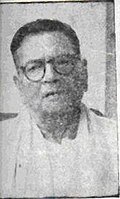
Dhrubesh Chattopadhyay and the Revolutionary Tradition
Another significant name associated with Uttarpara’s revolutionary history is Dhrubesh Chattopadhyay, also written as Dhrubesh Charan Chatterjee.
He was born in Calcutta in 1904 but later moved to his uncle’s house in Uttarpara after the death of his parents. Uttarpara’s political and intellectual environment deeply influenced him.
Dhrubesh became associated with Amarendranath Chatterjee’s Uttarpara Swadeshi Yuba Samiti. He later came into contact with revolutionaries connected with the Chittagong revolutionary network. He was arrested in connection with the Dakshineswar Bomb Case in 1925 and was sentenced to rigorous imprisonment.
He was later sent to the Cellular Jail in the Andamans, one of the harshest colonial prisons used by the British for political prisoners. The conditions of imprisonment badly affected his health. After his release, he continued to remain connected with public causes, but he died young in 1938.
His life reminds us that Uttarpara’s contribution to the freedom movement was not limited to speeches, meetings, and institutions. It also included young men who took great personal risks and suffered imprisonment for the cause of independence.
Culture, Education, and Public Life
The Chatterjee families of Uttarpara were deeply involved in education and culture. From teachers and headmasters to artists, actors, lawyers, and organisers, their contributions were spread across many fields.
Their connection with Uttarpara Jaykrishna Public Library is especially significant. The library was one of the great intellectual spaces of Bengal, and several members of the Chatterjee families were associated with its development and cultural life.
The families were also linked to local organisations, schools, theatres, libraries, social clubs, and political groups. This tells us something important about old Uttarpara: it was not just a residential town. It was a place where public life mattered. Families took pride in contributing to institutions. Education, culture, and civic responsibility were seen as part of social respectability.
Why the Chatterjee Legacy Matters
The history of the Chatterjee families of Uttarpara matters because it gives us a fuller picture of the town.
Uttarpara’s heritage is often remembered through its famous library, municipality, Rajbari, and connection with the Bengal Renaissance. But behind these institutions were families, households, teachers, lawyers, organisers, and young political workers who helped create the town’s distinctive character.
The Chatterjees were part of this world. Their legacy is visible in old houses like Ukil Bari and Pathshala Bari, in the memory of local schools and libraries, in the names of lanes and streets, and in the stories of revolutionaries like Amarendranath and Dhrubesh.
Their story also shows how family histories can become town histories. A house that begins as a private residence becomes a landmark. A family library inspires young people. A lawyer’s home produces artists, teachers, political workers, and cultural organisers. A local youth group becomes connected with the larger struggle for independence.
That is the beauty of Uttarpara’s history. It is not made only of monuments. It is made of families, neighbourhoods, lanes, schools, libraries, and memories.
In that larger story, the Chatterjee families of Uttarpara occupy a proud and important place. Their contribution was not in one field alone. It spread across education, law, culture, public life, and the freedom movement. Through them, we see Uttarpara not merely as an old town, but as a living centre of Bengal’s civic and intellectual heritage.